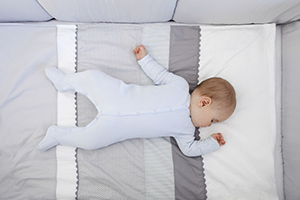
Here are some ideas for dressing baby for bed and ideas to help make baby comfortable while sleeping.
The temperature of a baby's room should be kept at a comfortable level for a lightly clothed adult.
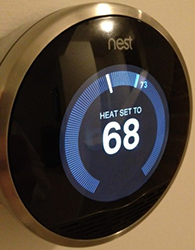
Overheating increases the risk of SIDS, so parents and caregivers shouldn't use heavy blankets or overdress the baby.
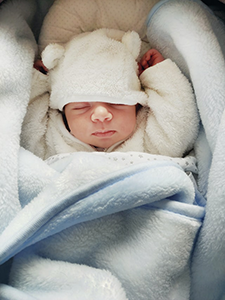
When getting the baby ready for bed, it is best not to dress the baby too warmly. The general rule for dressing babies for sleep is usually putting them in one additional layer than the adult would wear at night. Babies should NOT be placed in into their SafeSleep area with sheets or blankets.
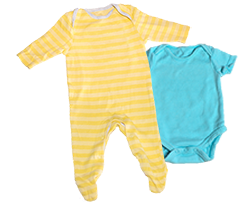
Dress the baby in layers of clothing instead of just thick pajamas. This allows for the addition or removal of a layer as the temperature changes. The parents or caregivers can do this by perhaps putting a onesie underneath a footed sleeper.
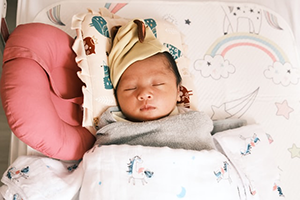
No hats in bed. Babies cool themselves by releasing heat from their heads and faces. Falling asleep with a hat can make a baby quickly overheat.
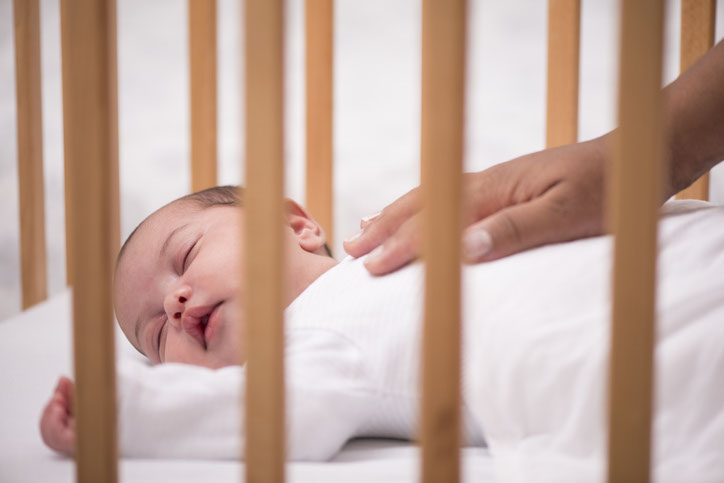
Perspiration, rash, wet hair, red cheeks and quickened breathing are all just a few signs that the baby may be overheating. Their hands and feet may remain cold/cool to the touch. Therefore, feeling the baby's chest, back or tummy is a better indication of their temperature. If these areas are hot or sweaty the adult checking them may want to take immediate action to make the baby cooler, like lowering the temperature in the room or removing a layer of clothing.
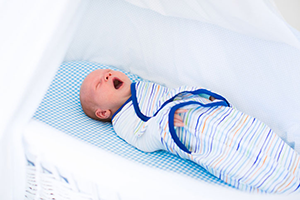
Swaddling can make the newborn feel safe and soothed. A lightweight cotton or muslin material can be good for this as they are both breathable and offer enough give for easy wrapping and tucking.
.jpg)
If the caregivers are not confident swaddling the baby, they can use swaddle sacks or suits that offer Velcro or zipper closures. Once the baby starts to roll over, it is time to get rid of the swaddle as it is no longer considered safe.
After the baby grows out of the swaddling stage, the caregiver can use footed pajamas, a sleep sack or sleep blanket.