.png)
1. Clean: Wash Hands and Surfaces Often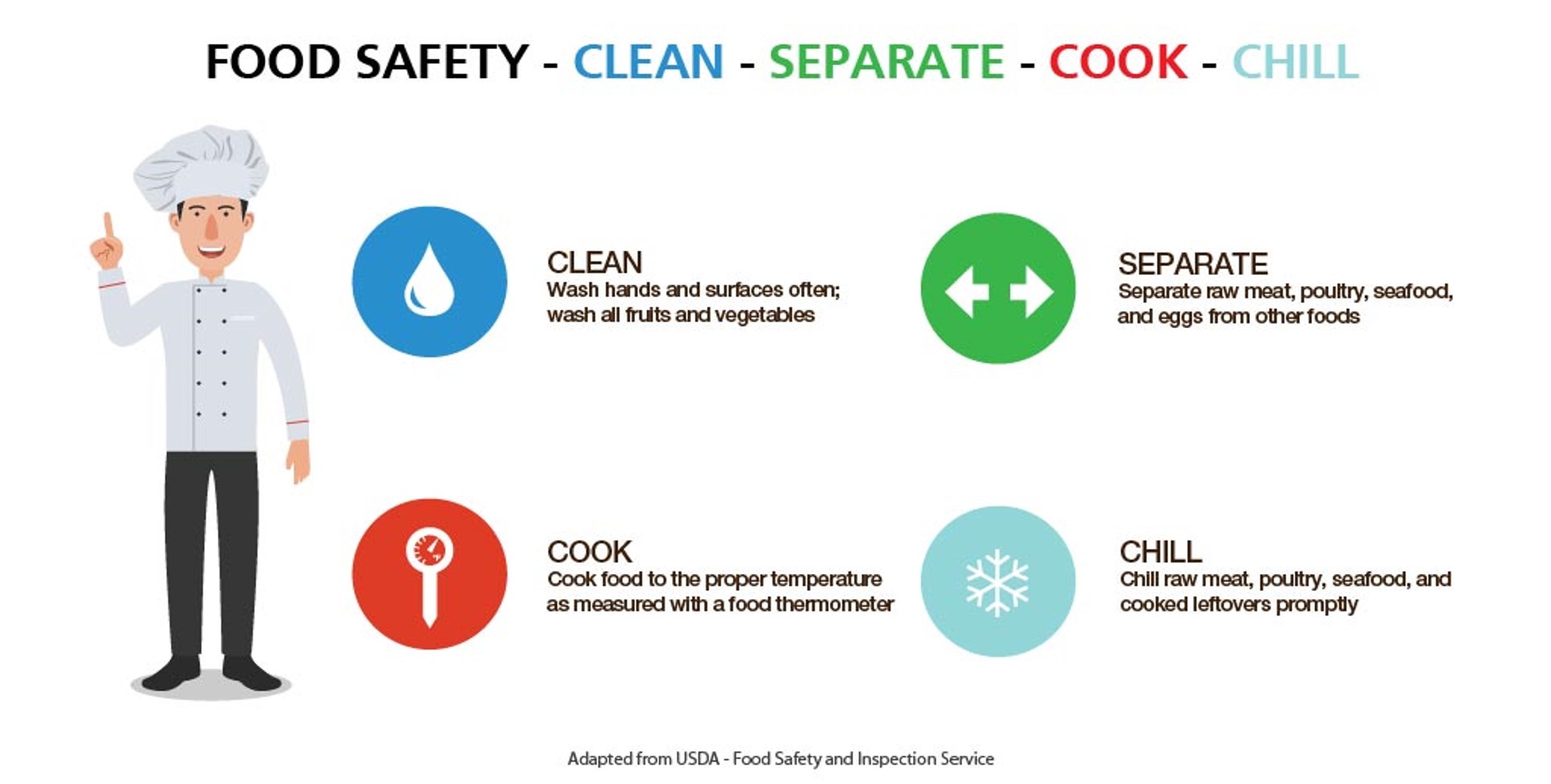
- Prevent Germs: Germs that cause food poisoning can survive in various places and spread around the kitchen.
- Handwashing: Wash hands with soap and warm or cold water for at least 20 seconds before, during, and after preparing food, and before eating. Always wash hands after handling uncooked meat, poultry, seafood, flour, or eggs.
- Surface Cleaning: After preparing each food item, clean utensils, cutting boards, and countertops with hot, soapy water.
- Rinsing Produce: Rinse fresh fruits and vegetables under running water to remove dirt and bacteria.
2. Separate: Avoid Cross-Contamination
- Separation: Raw meat, poultry, seafood, and eggs can spread germs to ready-to-eat foods. Keep them separate during storage and preparation.
- Shopping: When grocery shopping, keep raw items separate from other foods to prevent contamination.
- Storage: Store raw meat, poultry, and seafood in sealed containers or securely wrapped to prevent juices from contaminating other foods.
- Preparation: Use separate cutting boards for raw meat and other foods like produce and bread. Do not wash raw chicken as it can spread germs; if washing, follow safe procedures.
3. Cook: Ensure Food Reaches Safe Temperatures
- Proper Cooking: Cooking food to the right internal temperature kills harmful germs. Use a food thermometer to check temperatures.
- Whole cuts of beef, veal, lamb, pork: 145°F (rest for 3 minutes)
- Fish: 145°F or until the flesh is opaque
- Ground meats: 160°F
- All poultry: 165°F
- Leftovers and casseroles: 165°F
- Microwaving: Follow recommended cooking times and let food sit after microwaving to ensure even heating. Use a food thermometer to check that food reaches 165°F.
4. Chill: Refrigerate Promptly
- Temperature Control: Keep your refrigerator at 40°F or below and your freezer at 0°F or below. Use a thermometer to monitor these temperatures.
- Refrigeration: Refrigerate perishable items within 2 hours (1 hour if above 90°F). Package warm food in shallow containers to cool quickly.
- Safe Thawing: Thaw frozen food in the refrigerator, in cold water, or the microwave. Avoid thawing at room temperature to prevent bacterial growth.