.png)
Food Temperature Danger Zones
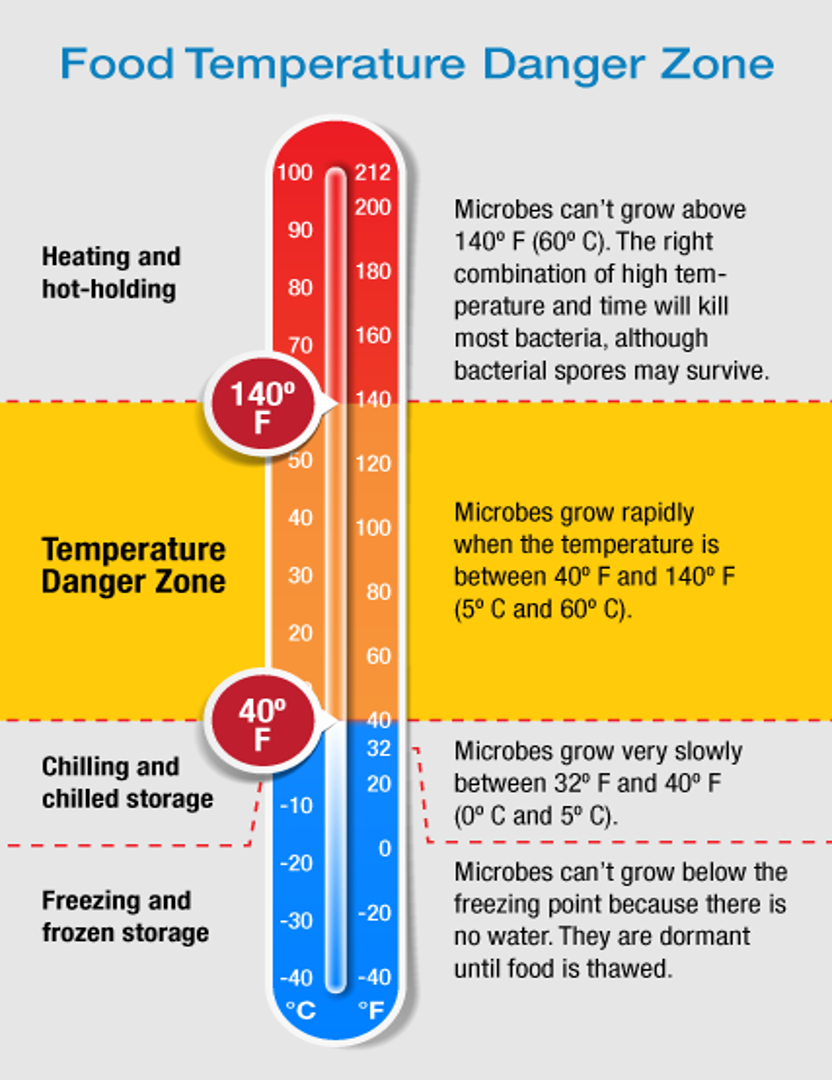 To ensure food safety, it's crucial to maintain proper temperatures and keep a daily temperature log for each refrigerator, freezer, and pantry.
Refrigerators: Food should be kept at or below 41 degrees Fahrenheit to prevent bacterial growth.
Freezers: Ensure that freezers are kept at 0 degrees Fahrenheit or lower to keep food frozen solid.
Cooking Meat Safely
To guarantee that meat is cooked to a safe temperature:
1. Use a Meat Thermometer: Insert the thermometer into the thickest part of the meat, avoiding bones, as bones can affect the accuracy of the reading.
2. Check Temperature: Ensure the meat reaches the recommended internal temperature for safety. This varies depending on the type of meat and cooking method.
By adhering to these guidelines and monitoring temperatures daily, you can significantly reduce the risk of foodborne illnesses.
Food Safety Video
This video covers four essential steps for keeping food safe: clean, separate, cook, and chill. Learn how to properly handle food to prevent contamination and ensure safe preparation practices. For more details, visit the foodsafety.gov website.
Food Safety Tips (0:32)